Key Takeaways
- A balanced prenatal diet supports fetal development and helps manage common pregnancy symptoms.
- Key nutrients include folic acid, iron, calcium, vitamin D, DHA, and iodine — most are covered by a quality prenatal vitamin.
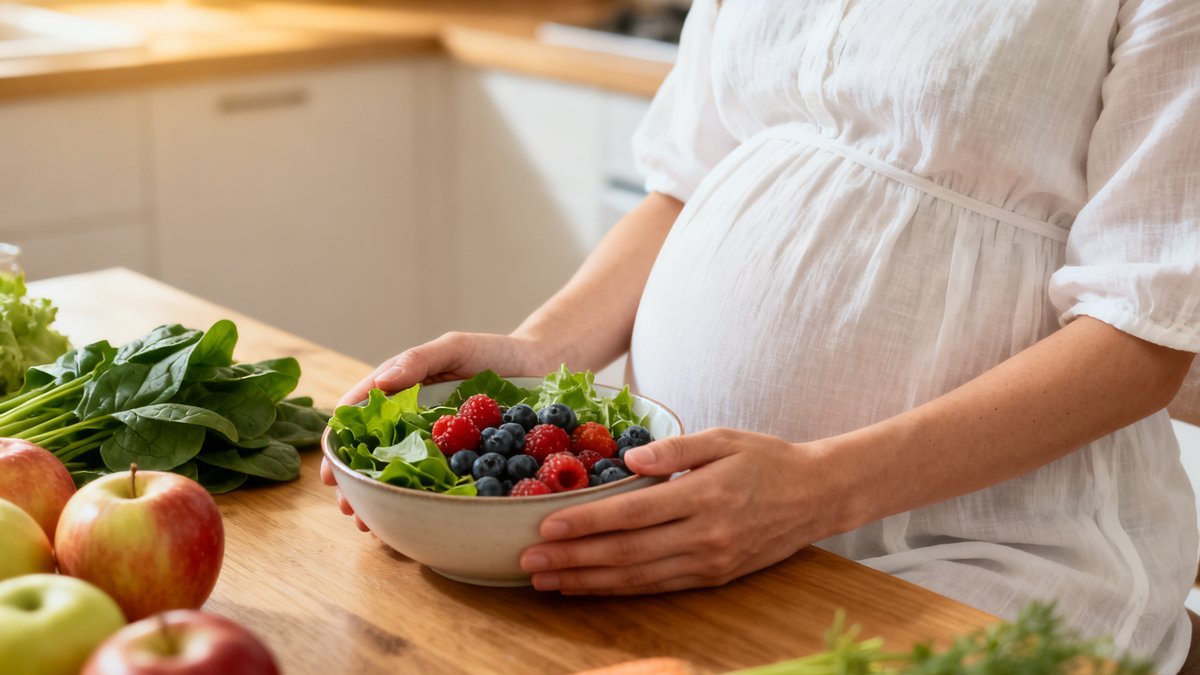
- Focus on whole foods: lean proteins, colorful vegetables, fruits, whole grains, and healthy fats.
- Foods to avoid include alcohol, high-mercury fish, unpasteurized dairy, and undercooked meats.
- Staying hydrated — aim for 8-10 cups of water daily — is as important as what you eat.
Building a Balanced Pregnancy Plate: Nutrients and Food Sources
Pregnancy nutrition is about quality and consistency rather than perfection. The foods you eat provide the building blocks for your baby's organs, bones, brain, and overall development. A well-balanced pregnancy diet emphasizes nutrient-dense whole foods while allowing for reasonable flexibility.
Folic acid or folate is critical during early pregnancy for preventing neural tube defects. Good food sources include dark leafy greens (spinach, kale, collards), legumes (lentils, chickpeas, black beans), asparagus, Brussels sprouts, and fortified grains. The recommended daily intake during pregnancy is 600-800 micrograms, which most prenatal vitamins provide.
Iron requirements nearly double during pregnancy to support increased blood volume and oxygen delivery to the baby. Iron-rich foods include lean red meat, poultry, fish, fortified cereals, beans, and spinach. Pairing iron-rich foods with vitamin C sources like citrus fruits, bell peppers, or tomatoes significantly improves absorption. Many women need an iron supplement in addition to dietary sources, especially in the second and third trimesters.
Calcium and vitamin D work together to build your baby's bones and teeth. Dairy products, fortified plant milks, canned salmon with bones, and leafy greens are excellent calcium sources. Vitamin D comes primarily from sunlight exposure and fortified foods, but supplementation is common since dietary sources are limited. Most prenatal vitamins contain 400-600 IU of vitamin D.
DHA, an omega-3 fatty acid, supports your baby's brain and eye development. Cold-water fish like salmon, sardines, and trout are excellent sources, as are algae-based supplements for those who avoid fish. Most prenatal vitamins now include DHA, or you can take a separate DHA supplement. Aim for 200-300 mg of DHA daily throughout pregnancy.
Every child develops differently, and these general parenting guidelines should be discussed with your healthcare provider for personalized advice.
Foods to Prioritize and Avoid During Pregnancy
Building your diet around whole, minimally processed foods provides the widest range of nutrients. Vegetables should fill the largest portion of your plate, with an emphasis on variety. Different colors provide different vitamins and phytonutrients. Aim for a mix of leafy greens, cruciferous vegetables, orange and red vegetables, and starchy vegetables like sweet potatoes.
Lean proteins support the growth of fetal tissues and maternal blood supply. Include sources like poultry, fish low in mercury, eggs, legumes, tofu, and lean cuts of beef or pork. Plant-based protein sources like beans and lentils have the added benefit of providing fiber, which helps combat pregnancy-related constipation.
Whole grains provide sustained energy, B vitamins, and fiber. Choose options like oatmeal, quinoa, brown rice, whole wheat bread, and barley over refined grain products. The fiber in whole grains also helps stabilize blood sugar, which is particularly beneficial for women at risk of gestational diabetes.
Foods to avoid during pregnancy include alcohol, which has no known safe level; high-mercury fish including shark, swordfish, king mackerel, and tilefish; unpasteurized dairy and soft cheeses like brie, camembert, and feta unless made from pasteurized milk; raw or undercooked meats, poultry, eggs, and seafood due to risk of foodborne illness; and deli meats unless heated to steaming hot to kill potential Listeria bacteria.
Caffeine deserves special mention. Most experts agree that up to 200 mg per day — roughly one 12-ounce cup of coffee — is safe during pregnancy. However, caffeine crosses the placenta and your baby metabolizes it slowly. If you have concerns about caffeine, consider switching to decaf or herbal teas that are pregnancy-safe.
Practical Meal Planning and Managing Common Nutrition Challenges
Meal planning during pregnancy can feel overwhelming, especially when nausea or food aversions make eating difficult. A practical approach is to focus on adding nutrients rather than restricting foods. Instead of thinking about what you cannot eat, focus on how to incorporate more nutrient-dense options into your existing meals.
For managing morning sickness and food aversions in early pregnancy, try eating small, frequent meals every 2-3 hours to keep your stomach from being empty. Cold foods often have less odor and may be more tolerable than hot foods. Bland options like crackers, toast, bananas, and rice are often easier to stomach. If aversions are severe, focus on taking your prenatal vitamin and eating whatever you can tolerate until the phase passes.
Constipation is a common pregnancy complaint caused by hormonal changes and iron supplements. Combat it by drinking plenty of water, increasing fiber intake through fruits, vegetables, and whole grains, and staying active. Prunes, pears, and kiwi have natural laxative effects that can help. If constipation persists, ask your provider about a gentle fiber supplement.
Healthy weight gain varies based on your pre-pregnancy body mass index. Women at a healthy BMI typically gain 25-35 pounds total, with most weight gain occurring in the second and third trimesters. Your healthcare provider will monitor your weight gain and offer guidance if you are trending outside the recommended range.
Staying hydrated is one of the simplest yet most impactful things you can do for your pregnancy health. Water supports increased blood volume, forms amniotic fluid, aids digestion, and helps prevent urinary tract infections. Aim for 8-10 cups of fluid per day, more in hot weather or if you are exercising. Water is best, but milk, herbal teas, and water-rich fruits and vegetables also contribute to your fluid intake.
Trust your instincts as a parent. You know your child better than anyone else. When something does not feel right, speak up and ask questions.
Frequently Asked Questions
Do I need to eat more calories during pregnancy?
The old idea of 'eating for two' is misleading. In the first trimester, you do not need any additional calories. In the second trimester, you need about 300-350 extra calories per day — roughly the equivalent of a yogurt with fruit and a handful of nuts. In the third trimester, about 450-500 extra calories per day. The focus should be on nutrient quality rather than calorie quantity.
Can I follow a vegetarian or vegan diet during pregnancy?
Yes, well-planned vegetarian and vegan diets can be healthy during pregnancy. Pay special attention to getting enough protein, iron, calcium, vitamin B12, vitamin D, and DHA. Plant-based iron sources like beans and spinach should be paired with vitamin C for absorption. Vitamin B12 and DHA supplements are essential for vegan diets, as these nutrients are not naturally found in plant foods.
Is it safe to eat fish during pregnancy?
Yes, fish is an excellent source of protein and DHA during pregnancy. The key is choosing low-mercury options. Safe choices include salmon, sardines, trout, anchovies, haddock, and tilapia, which you can eat 2-3 servings per week. Avoid high-mercury fish like shark, swordfish, king mackerel, and tilefish. Limit albacore tuna to one serving per week.
What should I do if I cannot keep my prenatal vitamins down?
If prenatal vitamins worsen your nausea, try taking them with food, at a different time of day, or switching to a gummy or chewable version. Some women find that splitting the dose — taking half in the morning and half at night — helps. If you cannot tolerate any prenatal vitamin, focus on getting folate from fortified foods and discuss alternative supplement options with your healthcare provider.
Conclusion
Prenatal nutrition does not have to be complicated. Focus on eating a variety of whole foods, staying hydrated, and taking a quality prenatal vitamin. When challenging symptoms like nausea or aversions make eating difficult, remember that this phase is temporary. Your body is remarkably efficient at nourishing your baby even when your diet is not perfect.
This information is provided for general parenting guidance and educational purposes. Always consult with your healthcare provider for medical advice specific to your situation.