Key Takeaways
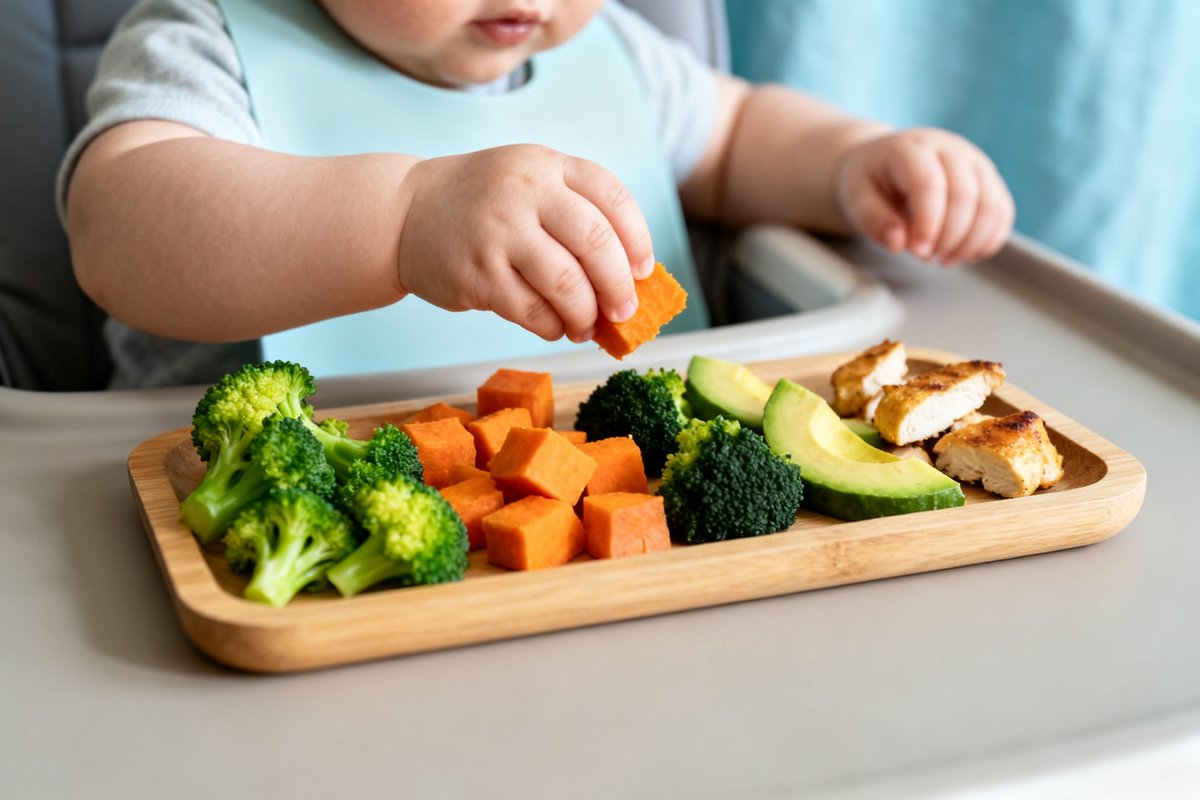
- Baby-led weaning lets babies self-feed soft finger foods from 6 months, skipping purees entirely and promoting independence.
- Traditional puree feeding involves spoon-feeding progressively thicker textures, offering more control over portion sizes and nutrient intake.
- Both methods are safe when proper precautions are followed, and many families combine elements of both approaches.
- Your baby's developmental readiness, your parenting style, and your family's schedule all influence which method suits you best.
- The best feeding method is the one that makes mealtimes positive and stress-free for your family.
Baby-Led Weaning: Benefits and Practical Considerations
Baby-led weaning (BLW) is built on the principle that babies are capable of feeding themselves from the start of solids, without a puree stage. The approach has gained significant popularity since its introduction by UK midwife Gill Rapley in 2008, and many parents find it simplifies mealtime because babies eat modified versions of whatever the family is having, rather than requiring separate meal preparation.
Key benefits reported by BLW families include less stressful mealtimes because parents do not need to spoon-feed, exposure to a wider variety of tastes and textures from the start, development of chewing skills earlier, improved hand-eye coordination through self-feeding, and potential for healthier long-term eating patterns because babies learn to regulate their own intake. Some studies suggest BLW babies may be less picky eaters as toddlers.
Practical considerations for BLW include significant mess, especially in the early weeks. Accept that food will end up on the floor, in hair, and everywhere in between. Use a splat mat under the high chair, dress your baby in easy-to-clean bibs or diaper-only for meals, and plan for bath time after dinner. The mess phase typically passes as your baby's oral motor skills improve.
Gagging is more common in BLW than puree feeding. Babies need to learn to move food from the front to the back of their mouths and to manage pieces of different sizes. This learning involves some gagging, which can be unsettling for parents. Understanding the difference between gagging (noisy, productive) and choking (silent, obstructive) is essential before starting BLW.
BLW requires commitment to food safety guidelines: foods must be soft enough to mash between your fingers, cut into safe shapes (finger-sized spears, not small rounds), and all meals must be fully supervised. If you cannot commit to these guidelines consistently, BLW may not be the right approach for your family — and that is perfectly fine.
Every child develops differently, and these general parenting guidelines should be discussed with your healthcare provider for personalized advice.
Traditional Puree Feeding: Benefits and Practical Considerations
Traditional puree feeding, where parents spoon-feed progressively thicker purees to their baby, has been the standard approach to introducing solids for generations. Despite the recent popularity of baby-led weaning, puree feeding remains a perfectly valid and effective way to introduce solids.
Benefits of the puree approach include greater control over portion sizes and nutrient intake, which can be reassuring for parents of babies who were premature or have growth concerns. Purees can be easier for babies with oral motor delays or coordination issues. The mess is more contained with spoon-feeding compared to BLW. Parents who worry about choking often find purees less anxiety-provoking.
Puree feeding allows for strategic nutrient delivery. You can ensure your baby gets iron-rich foods consistently, mix in high-calorie ingredients like avocado or nut butter for weight gain, and combine flavors your baby might not accept individually. For families with specific cultural food practices, purees can be a way to introduce traditional flavors in an age-appropriate form.
Some concerns with puree feeding include the potential for babies to not learn chewing skills as early, the possibility of overfeeding if parents do not follow baby's fullness cues, and the extra time required for preparing and storing purees. Babies who stay on smooth purees too long may resist textured foods later, so texture progression is important.
If you choose the puree approach, plan for texture progression. Move from thin purees to thicker mashes by 7 months. Introduce soft, mashable chunks by 8 months. Offer soft finger foods by 9 months. By 10-12 months, your baby should be eating mostly the same foods as the rest of the family, cut into safe sizes. Delaying texture progression beyond 10 months can lead to feeding difficulties.
Combination Approach and How to Decide What Is Right for You
Most families do not use one method exclusively. A combination approach offers the benefits of both methods while minimizing the drawbacks. For example, you might offer iron-rich purees at one meal for nutritional insurance and let your baby self-feed soft finger foods at another for skill development. Or you might pre-load a spoon and hand it to your baby, giving them control over the final step of bringing it to their mouth.
Consider your baby's temperament when choosing an approach. Some babies refuse to be spoon-fed from the start and demand to feed themselves — they may be natural BLW candidates. Others seem uncertain about large pieces of food and prefer the gentler introduction of purees. Some change preferences as they develop. Following your baby's cues rather than rigid adherence to a method often produces the best outcome.
Consider your family's practical reality. If both parents work and weeknight evenings are chaotic, BLW may be more practical because babies eat what you eat. If you have a nanny or grandparent providing daytime care, consider whether they are comfortable with your chosen method. Communication with all caregivers about the approach and safety rules is essential.
Consider your own anxiety level around feeding. If you are extremely worried about choking, baby-led weaning may cause you significant stress that your baby will pick up on. A modified approach — starting with thicker purees and soft finger foods that dissolve easily — can build your confidence while still giving your baby some self-feeding experience.
There is no deadline for choosing a method. You can start with one approach and switch to another if it is not working. You can use purees for a month and transition to BLW. You can do BLW at dinner and purees at lunch. The experts agree on one thing: there is no evidence that either method produces better long-term health outcomes when done safely.
Trust your instincts as a parent. You know your child better than anyone else. When something does not feel right, speak up and ask questions.
Frequently Asked Questions
Is one method safer than the other?
Both methods are safe when proper precautions are followed. The choking risk is similar between methods when foods are prepared appropriately. In puree feeding, ensure purees are smooth without lumps that could cause gagging. In BLW, ensure all foods are soft and cut into safe shapes. The most important safety factor is adult supervision during all meals, regardless of method.
Can I switch from purees to baby-led weaning?
Yes, you can switch methods at any point. If your baby has been eating purees and you want to transition to BLW, start offering soft finger foods alongside purees. Let your baby explore the finger foods without pressure. Some babies adapt quickly; others need more time to figure out the mechanics of self-feeding. Go at your baby's pace.
What if my baby refuses to be spoon-fed?
Some babies strongly prefer self-feeding and will clamp their mouth shut, turn their head away, or bat the spoon away when you try to feed them. This does not mean something is wrong — it means your baby values independence. Offer soft finger foods instead and let your baby feed themselves. This is how many families end up doing baby-led weaning by default.
Do I need to buy special equipment for either method?
For purees, a blender or food processor and ice cube trays for freezing portions are helpful. For BLW, you need a high chair with a footrest (important for safe swallowing mechanics), a splat mat, and easy-to-clean bibs. Neither method requires expensive specialized equipment. Both benefit from an open cup and a straw cup for water practice.
Conclusion
The debate between baby-led weaning and purees often feels bigger than it needs to be. What matters most is that your baby receives nutritious food in a safe, positive environment. Trust yourself to know what works for your family. There is no award for doing one method perfectly, and your baby will not be disadvantaged by whichever approach you choose.
This information is provided for general parenting guidance and educational purposes. Always consult with your healthcare provider for medical advice specific to your situation.