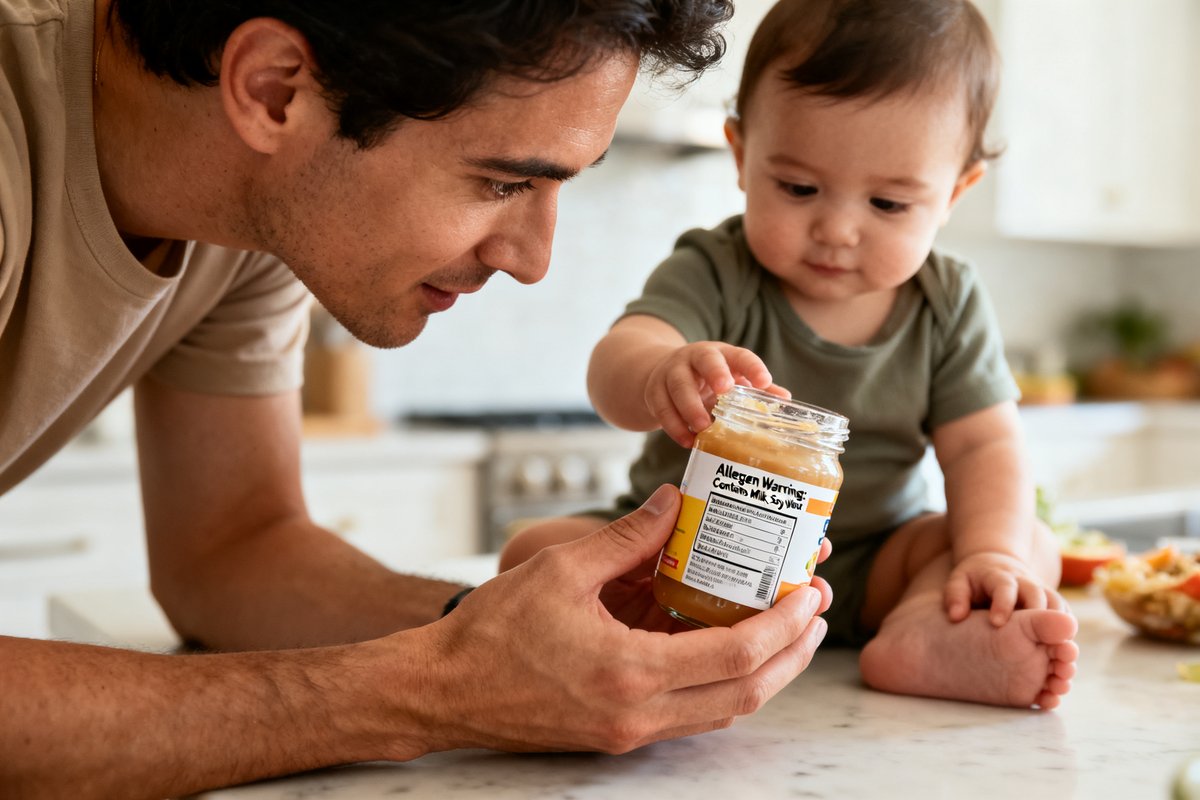
Early introduction of allergenic foods around 6 months may help prevent food allergies, especially peanut allergy.
The top allergens are milk, eggs, peanuts, tree nuts, soy, wheat, fish, shellfish, and sesame.
Mild allergic reactions include hives, facial redness, and mild vomiting. Severe reactions require immediate epinephrine and emergency care.
If your baby has severe eczema or a known food allergy, consult an allergist before introducing high-risk foods.
Once an allergen is introduced safely, continue offering it regularly (at least weekly) to maintain tolerance.
Understanding Food Allergies in Infants
Food allergies occur when the immune system mistakenly identifies a food protein as harmful and mounts a defense against it. In infants, the most common food allergies are to cow's milk, eggs, and peanuts, though any food can potentially trigger an allergic response. Allergies affect roughly 5-8 percent of children, and many outgrow common allergies like milk and egg over time.
The rise in food allergies over recent decades led researchers to question the old advice of delaying allergenic food introduction. The landmark LEAP study published in 2015 dramatically changed our understanding of allergy prevention. The study showed that introducing peanut products early, around 4-6 months, actually reduced peanut allergy risk by up to 86 percent in high-risk infants compared to delaying introduction until after 12 months.
The difference between a food allergy and food intolerance is important. A food allergy involves the immune system and can be life-threatening. Food intolerance involves the digestive system and causes discomfort but is not life-threatening. Lactose intolerance, for example, causes gas and diarrhea but does not involve an immune response. True allergies can cause anaphylaxis.
Family history plays a role in allergy risk, but most children diagnosed with food allergies have no family history of allergies. Having a sibling with allergies increases risk somewhat. Severe eczema, especially when persistent, is the strongest known risk factor for developing food allergies. About 40 percent of children with severe eczema have a food allergy.
The good news is that the approach to allergy prevention has shifted from avoidance to early, regular exposure. Current guidelines recommend introducing allergenic foods early and keeping them in the diet regularly. This general parenting advice represents one of the most significant changes in pediatric nutrition guidance in recent decades.
Every child develops differently, and these general parenting guidelines should be discussed with your healthcare provider for personalized advice.
Introducing Allergenic Foods Safely
When introducing allergenic foods, start with one new allergen at a time and wait 2-3 days before introducing another. This approach makes it easier to identify which food caused a reaction if one occurs. Continue offering already-introduced safe foods while trying new ones so your baby maintains a varied diet.
For peanut introduction, peanut butter should be thinned with water, breast milk, or formula to a safe, smooth consistency. Never give whole peanuts or spoonfuls of peanut butter to infants due to choking risk. Bamboo peanut puffs that dissolve easily are another safe option. Start with a small amount — about 1/4 teaspoon — and watch your baby closely for at least two hours after first exposure.
Egg introduction should start with well-cooked egg (hard-boiled or scrambled until fully set). Start with a small amount, such as a small piece of scrambled egg or 1/4 of a hard-boiled egg mashed. Raw or undercooked egg should not be given to infants. As with peanuts, watch for any signs of reaction after first introduction.
For high-risk babies — those with severe eczema or existing food allergies — the American Academy of Pediatrics recommends evaluation by a pediatric allergist before introducing peanuts and other high-risk foods. The allergist may recommend in-office introduction or supervised feeding where medical treatment is immediately available if a reaction occurs.
Once an allergenic food is introduced successfully, it should be kept in your baby's diet on a regular basis. Research suggests that eating the food at least weekly maintains tolerance. Infrequent exposure may allow the allergy to develop even after initial successful introduction. Consider adding peanut butter to oatmeal or yogurt, or incorporating eggs into regular meal rotation.
Recognizing and Managing Allergic Reactions
Allergic reactions range from mild to severe and can involve the skin, digestive system, respiratory system, and cardiovascular system. Skin reactions include hives (raised, red, itchy welts), facial flushing, and worsening eczema. Digestive reactions include vomiting, diarrhea, and abdominal pain. Respiratory symptoms include wheezing, difficulty breathing, and throat tightness.
Mild to moderate reactions can often be managed at home with antihistamines like diphenhydramine (Benadryl). Call your pediatrician for guidance on dosing and next steps. Even after a mild reaction resolves, the food should be avoided until discussed with your doctor, who may recommend allergy testing to confirm the diagnosis.
Anaphylaxis is a severe, life-threatening allergic reaction that requires immediate treatment. Signs include difficulty breathing, swelling of the tongue or throat, trouble swallowing, hoarse voice, persistent coughing, wheezing, paleness or floppiness, and loss of consciousness. Anaphylaxis requires immediate injection of epinephrine (EpiPen) and emergency medical care.
If your baby is diagnosed with a food allergy, work with your pediatrician or allergist to create a written emergency action plan. Ensure all caregivers, including grandparents, daycare providers, and babysitters, understand the allergy, know how to read food labels, and are trained to recognize and respond to reactions. Keep antihistamines and epinephrine auto-injectors accessible at all times.
Most children outgrow some food allergies. Cow's milk and egg allergies resolve by school age in about 80 percent of children. Peanut and tree nut allergies persist into adulthood for most children, though about 20 percent outgrow peanut allergy. Regular follow-up with an allergist can track whether your child is outgrowing their allergy through allergy testing and supervised food challenges.
Trust your instincts as a parent. You know your child better than anyone else. When something does not feel right, speak up and ask questions.
Frequently Asked Questions
Should I avoid allergenic foods while pregnant or breastfeeding?
Current evidence does not support avoiding allergenic foods during pregnancy or breastfeeding as a strategy to prevent food allergies. In fact, some research suggests that eating a varied diet including common allergens during pregnancy and breastfeeding may be protective. Unless you have a food allergy yourself, there is no reason to restrict your diet during pregnancy or while nursing.
What are the most common signs of a food allergy in babies?
Hives (raised, red, itchy bumps on the skin) are the most common sign of an allergic reaction in babies. Other signs include redness or swelling around the mouth, facial swelling, vomiting, diarrhea, and worsening eczema. Respiratory symptoms like wheezing or difficulty breathing are less common but more serious. Symptoms typically appear within minutes to two hours of eating the offending food.
Can food allergies develop later in childhood even if my baby tolerates the food initially?
Yes, food allergies can develop at any age, even to foods your child has eaten safely before. However, the risk is highest in infancy and early childhood. Adult-onset food allergies are less common but can occur. This is why it is important to continue watching for reactions even after a food has been introduced successfully.
How is a food allergy diagnosed in babies?
If your baby has a reaction to a food, your pediatrician will take a detailed history and may recommend referral to an allergist. The allergist may perform skin prick testing or blood tests to measure allergen-specific antibodies. In some cases, an oral food challenge — supervised feeding of the suspected allergen in a controlled medical setting — is needed to confirm or rule out an allergy definitively.
Conclusion
Food allergies can feel daunting, but the current approach of early, regular introduction of allergenic foods has significantly reduced the risk of developing allergies for many children. By understanding the signs of allergic reactions, knowing how to respond in an emergency, and working closely with your pediatrician, you can navigate food introduction with confidence and keep your baby safe and well-nourished.
This information is provided for general parenting guidance and educational purposes. Always consult with your healthcare provider for medical advice specific to your situation.
Managing Food Allergies Outside the Home
Managing food allergies becomes more complex as your child grows and spends more time away from home. For childcare and school, work with the facility to create a food allergy action plan that includes emergency contact information, symptoms to watch for, medications and their administration instructions, and a clear procedure for responding to reactions. Provide the school with epinephrine auto-injectors and ensure staff are trained in their use. Many states have laws requiring schools to have undesignated epinephrine available for emergencies.
Restaurant dining with food allergies requires proactive communication. Call ahead to discuss your child allergies with the manager or chef, especially during less busy hours. Ask specific questions about ingredient sourcing, cross-contamination risks, and preparation methods. When ordering, clearly state that your child has a food allergy, not a preference, to ensure staff take the request seriously. Consider carrying chef cards that explain your child allergies in the local language when traveling internationally. Many families find that choosing restaurants with simple, from-scratch preparation reduces cross-contamination risk compared to complex menu items.