Key Takeaways
- Learning styles theory suggests that individuals learn more effectively when information is presented in their preferred modality.
- Visual learners prefer seeing and reading information. Auditory learners learn best through hearing and speaking. Kinesthetic learners need movement and hands-on experience.
- Most children use a combination of styles, with one modality usually dominant.
- Knowing your child's learning style helps you adapt your teaching approach, but do not label or limit your child with it.
- The most effective approach is to present information through multiple modalities, strengthening all learning pathways.
Identifying Your Child's Learning Style
Understanding how your child learns best can transform your homeschool experience. A child who struggles with worksheets may thrive with hands-on activities. A child who cannot seem to follow spoken instructions may understand immediately when shown a picture. Recognizing these patterns helps you adapt your teaching to your child's natural strengths.
Visual learners think in pictures and prefer to see information. They often remember faces but forget names, take detailed notes, use highlighters and color-coding, prefer reading instructions over listening to them, and may be distracted by visual clutter. They benefit from diagrams, charts, mind maps, videos, and written instructions. If your child loves drawing, puzzles, and watching demonstrations, they may be a visual learner.
Auditory learners learn through hearing and speaking. They often remember names but forget faces, prefer listening to explanations over reading, talk through problems out loud, enjoy discussion and music, and may be distracted by background noise. They benefit from audiobooks, discussions, verbal instructions, songs and rhymes for memorization, and reading aloud. If your child loves talking, music, and being read to, they may be an auditory learner.
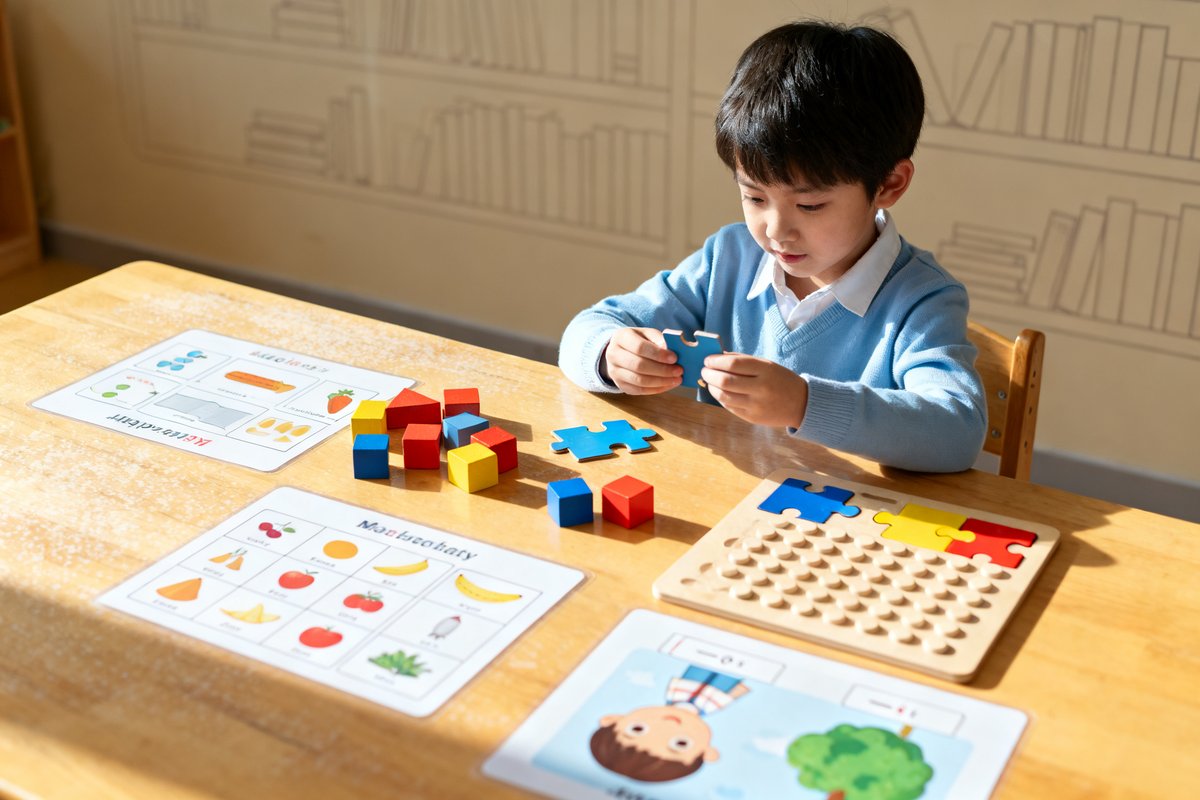
Kinesthetic learners learn through movement and touch. They often need frequent breaks when sitting, fidget or move while learning, prefer hands-on activities over worksheets, have excellent muscle memory, and may struggle with traditional desk work. They benefit from manipulatives, experiments, role-playing, field trips, and incorporating movement into lessons. If your child is always in motion, loves building and touching things, and cannot sit still for long, they may be a kinesthetic learner.
Most children do not fit neatly into one category. A child might be primarily visual with strong kinesthetic tendencies, or equally auditory and visual. The goal is not to categorize your child but to notice patterns and adapt accordingly. Pay attention to what works and what does not, and ask your child what helps them learn best.
Every child develops differently, and these general parenting guidelines should be discussed with your healthcare provider for personalized advice.
Teaching Strategies for Each Learning Style
For visual learners, use color-coding for subjects and concepts. Create charts, diagrams, and mind maps to organize information. Provide written instructions alongside verbal ones. Use videos, slideshows, and picture books. Let your child take notes or doodle while listening. Encourage them to visualize information and draw pictures of concepts. Graphic organizers like Venn diagrams and flowcharts are especially effective for visual learners.
For auditory learners, incorporate discussion into every subject. Read aloud and have your child read aloud to you. Use audiobooks and podcasts. Sing songs and create rhymes for memorizing facts. Talk through math problems step by step. Allow your child to explain concepts back to you as a review strategy. Record lessons for later listening. Silence can be uncomfortable for auditory learners, so background music or white noise may help concentration.
For kinesthetic learners, prioritize hands-on activities whenever possible. Use math manipulatives, science experiments, building projects, and art. Incorporate movement into lessons — walk while practicing spelling words, use hand gestures for math facts, act out historical events. Allow standing desks or alternative seating like balance balls. Take frequent movement breaks. Use textured materials and hands-on games for practice and review.
For children who do not fit neatly into one category, multimodal teaching is most effective. Present new information in multiple ways: show a video (visual), discuss it (auditory), and do a related hands-on activity (kinesthetic). This approach strengthens all learning pathways and reinforces learning through repetition across modalities.
Adapting to your child's learning style does not mean avoiding their weaker modalities. Children still need to develop skills in all areas. A kinesthetic learner still needs to practice listening and reading. The key is to use their strength as the primary entry point for new information while gradually building skills in other areas.
Beyond Learning Styles: A Broader View of How Children Learn
While learning styles are a helpful framework, research on their scientific validity is mixed. Some studies suggest that matching instruction to learning style does not consistently improve learning outcomes. This does not mean understanding how your child prefers to learn is useless — it means learning styles are one factor among many that influence how children learn.
Executive function skills — working memory, cognitive flexibility, and inhibitory control — significantly impact learning. A child with weak working memory may struggle regardless of learning style. A child with strong inhibitory control may persist through challenging material more effectively. Supporting executive function development through routines, checklists, and gradual responsibility helps all learners.
Prior knowledge is the strongest predictor of how well a child will learn new information in a subject. A child who knows a lot about dinosaurs will learn more from a dinosaur book than a child who knows nothing about dinosaurs, regardless of learning style. Building broad background knowledge through reading, experiences, and conversation supports learning across all subjects.
Interest and motivation are powerful drivers of learning. A child who cares deeply about a topic will overcome modality challenges to learn it. Following your child's interests, connecting required subjects to their passions, and creating authentic reasons to learn — writing a letter to a grandparent, calculating materials for a building project — can be more effective than optimizing modality matching.
The most important factor in learning is not modality or style but engagement. A child who is actively engaged in meaningful learning will learn more than a child who is passively receiving information in their preferred style. Focus on creating active, engaging learning experiences, and use learning style awareness as one tool in your broader teaching toolkit.
Trust your instincts as a parent. You know your child better than anyone else. When something does not feel right, speak up and ask questions.
Frequently Asked Questions
Can learning styles change as my child grows?
Yes, learning preferences can change with development and experience. A kinesthetic preschooler may develop strong visual learning preferences by middle school. Many children become more flexible learners as they mature. Reassess your child's learning preferences periodically and adapt your approach accordingly.
What if my child has a different learning style than I do?
This is common and can be a source of frustration if not recognized. An auditory teaching parent with a visual learner child may both feel frustrated if the parent keeps explaining verbally and the child keeps not understanding. Recognizing the mismatch is the first step. Deliberately use your child's preferred modality for introducing new concepts, even if it feels unnatural to you.
How do I adapt curriculum for my child's learning style?
Most curricula can be adapted. For visual learners, add diagrams, color-coding, and written instructions. For auditory learners, add discussions, audiobooks, and verbal explanations. For kinesthetic learners, add manipulatives, movement, and hands-on projects. Start with small adaptations and see what works. Many curriculum publishers offer suggestions for adapting their materials.
My child seems to learn well no matter how I present information. Should I still focus on learning styles?
Some children are genuinely flexible learners who adapt easily to different teaching approaches. If your child is learning well across modalities, there is no need to focus heavily on learning styles. Continue offering variety in your teaching to keep learning engaging, and keep learning style awareness in your back pocket in case challenges arise later.
Conclusion
Understanding your child's learning style is a useful tool for creating engaging, effective learning experiences. Use it as one lens among many for understanding your child, not as a rigid label. The most effective teachers are those who observe their children carefully, adapt their approach based on what works, and keep learning joyful and engaging.
This information is provided for general parenting guidance and educational purposes. Always consult with your healthcare provider for medical advice specific to your situation.