Key Takeaways
- Educational screen time involves active thinking, skill-building, and intentional learning. Entertainment screen time is primarily passive consumption.
- The same app or show can be educational or purely entertaining depending on how it is used.
- Co-viewing and co-playing with your child dramatically increases the educational value of any screen time.
- The goal is not to eliminate entertainment screen time but to ensure a balanced diet of digital content.
- High-quality educational screen time is better than low-quality entertainment, but no screen time replaces hands-on learning and human interaction.
Defining Educational vs Entertainment Screen Time
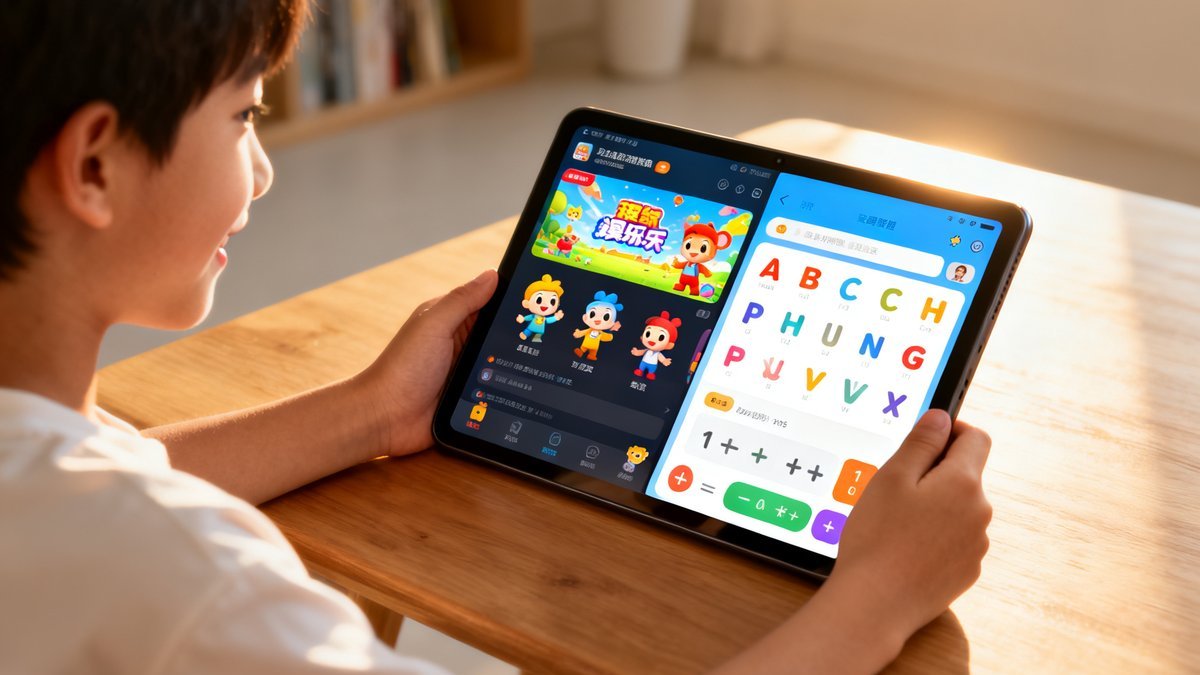
Not all screen time is created equal. The distinction between educational and entertainment screen time is not always clear-cut, but understanding the general difference helps you make intentional choices about your child's digital diet. Educational screen time involves active engagement, skill-building, and intentional learning. Entertainment screen time is primarily passive consumption designed for enjoyment.
Educational screen time characteristics include active thinking and problem-solving, clear learning goals or outcomes, adaptive difficulty that matches your child's level, meaningful feedback that helps your child improve, and content aligned with established learning progressions. Examples include using a math app that adapts to your child's level, following a coding tutorial, or watching a documentary and discussing it.
Entertainment screen time characteristics include passive viewing or consumption, primarily recreational goals, fixed difficulty regardless of skill level, limited or no feedback, and content designed for engagement rather than learning. Examples include watching cartoons, playing a simple arcade game, or scrolling through short-form video content.
The line between educational and entertainment is blurry. A science show watched without discussion is entertainment. A video game that teaches physics through gameplay can be educational. A reading app that your child uses to play games without actually reading is entertainment. The context and engagement matter more than the label.
Both educational and entertainment screen time have a place in a balanced digital diet. Entertainment screen time can be valuable for relaxation, social connection, and shared family experiences. The concern arises when entertainment screen time displaces all other activities and becomes the default rather than a deliberate choice.
Every child develops differently, and these general parenting guidelines should be discussed with your healthcare provider for personalized advice.
Making Screen Time More Educational: Practical Strategies
The single most effective strategy for increasing the educational value of screen time is co-viewing and co-playing. When you watch or play alongside your child, you can ask questions, make connections, extend learning, and help your child think critically about what they are seeing. A child watching an educational show alone gets some benefit. A child watching the same show with a parent who discusses it gets significantly more.
Ask open-ended questions during and after screen time. What did you learn? Why do you think that character made that choice? How does that relate to something we learned last week? What would you have done differently? These questions turn passive consumption into active learning and help your child retain and apply what they have seen.
Connect screen time to real-world experiences. If your child watches a show about oceans, plan a trip to an aquarium. If they play a game about building cities, take a walk through your neighborhood and notice urban planning features. If they learn about space, visit a science museum. These connections help learning stick and show your child that digital learning connects to the real world.
Choose interactive content over passive content when possible. Apps and games that require your child to think, create, and problem-solve offer more educational value than videos that your child simply watches. Even within video content, some platforms offer interactive features like quizzes, branching choices, or opportunities to pause and respond.
Set specific learning goals for screen time. Instead of just setting a timer, ask: What do you want to learn or accomplish during your screen time today? This shifts the mindset from screen time as a default activity to screen time as an intentional choice. Encourage your child to share what they learned or created after their screen time ends.
Creating a Balanced Digital Diet for Your Family
A balanced digital diet, like a balanced food diet, includes variety, moderation, and intentionality. Just as children need vegetables, protein, and grains as well as occasional treats, they need a mix of educational, creative, social, and entertainment screen time. The proportions vary by age, interests, and individual needs.
Consider the percentage of your child's screen time that falls into different categories. Aim for a rough balance that includes educational content, creative screen time (making digital art, coding, creating videos), social connection with real friends, physical activity breaks, and pure entertainment. No single category should dominate.
Use screen time as a reward or privilege that is earned through completing responsibilities like homework, chores, and physical activity. This frames screen time as one part of a balanced day rather than the default activity. Children who earn screen time tend to value it more and use it more intentionally.
Create screen-free routines and activities that do not involve screens at all. Family game nights, outdoor play, reading together, cooking, building, art projects, and simply talking provide essential balance. The goal is not to eliminate screens but to ensure that children have rich, varied experiences that include but are not dominated by screens.
Periodically do a digital audit with your family. Track all screen time for a week and categorize it. Discuss what patterns you notice. Are there apps or shows that provide real value? Are there ones that seem like time-fillers? What would your family like to change? This process builds digital awareness and helps everyone make more intentional choices.
Trust your instincts as a parent. You know your child better than anyone else. When something does not feel right, speak up and ask questions.
Frequently Asked Questions
Does educational screen time really help children learn?
Research suggests that high-quality educational screen time can support learning, especially when combined with adult engagement. Children can learn vocabulary, math concepts, science facts, and skills from well-designed digital content. However, the learning gains from educational screen time are generally smaller than from direct, hands-on instruction with a supportive adult.
How can I tell if my child is actually learning from educational apps?
Look for signs of active engagement: your child can explain what they are doing, they apply what they learned in other contexts, they ask questions about the content, and they show progress over time within the app. Many quality educational apps include progress tracking and reporting features. If your child cannot tell you what they learned, the app may be more entertaining than educational.
Is it okay to let my child watch entertaining content sometimes?
Absolutely. Entertainment screen time has value for relaxation, social connection, and pure enjoyment. The goal is not to eliminate entertaining content but to ensure it is part of a balanced digital diet that also includes educational, creative, social, and physical activities. A child who watches a fun movie with their family on a Friday night is having a very different experience from a child who watches random videos alone for hours.
My child resists educational apps and only wants entertainment. What should I do?
Start by understanding what your child finds appealing about their entertainment content. Can you find educational apps or content with similar themes? A child who loves racing games might enjoy engineering games about building vehicles. A child who loves cartoons might enjoy creative apps where they make their own animations. Incorporate educational elements into entertainment screen time through co-viewing and discussion.
Conclusion
The distinction between educational and entertainment screen time is useful, but the most important factor is the context in which screen time happens. Co-viewing, discussion, connection to real-world experiences, and intentionality matter more than whether an app carries an educational label. Help your child develop the awareness to make their own good choices about screen time.
This information is provided for general parenting guidance and educational purposes. Always consult with your healthcare provider for medical advice specific to your situation.