Key Takeaways
- Start childproofing before your baby becomes mobile -- once they start rolling, crawling, or pulling up, accidents can happen in seconds.
- Furniture anchoring is the single most important childproofing step, as unsecured furniture causes thousands of emergency room visits each year.
- Get down to your child's eye level to spot hazards you would otherwise miss from your adult perspective.
- Childproofing is an ongoing process that evolves as your child develops new mobility and reach capabilities.
Living and Family Room Safety
The living room presents numerous hazards for mobile babies and toddlers. Start by anchoring all furniture that could tip over, including bookshelves, entertainment centers, dressers, and television stands. Use furniture anchor straps that screw into wall studs, not just drywall anchors. Televisions should be mounted to the wall or secured with anti-tip straps. These precautions are critical because unsecured furniture causes roughly one child death every two weeks in the United States.
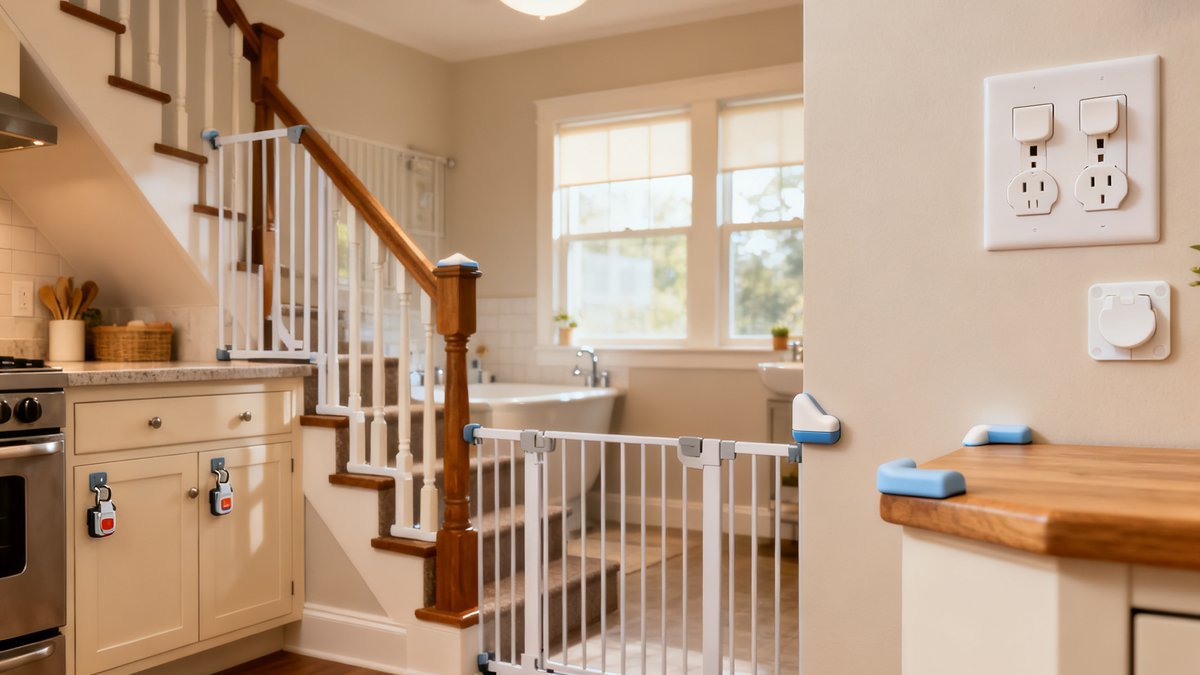
Cover all electrical outlets with tamper-resistant outlet covers or sliding outlet plates. Install corner and edge guards on coffee tables, entertainment centers, and any furniture with sharp corners. Secure blind cords and curtain strings with cord wraps or wind-ups, as these pose strangulation hazards. Remove decorative items small enough to fit through a toilet paper tube, which is the standard choking hazard test. Keep remote controls and electronics containing button batteries out of reach, as these batteries can cause severe internal burns if swallowed.
Fireplace and Hearth Safety
Fireplaces and hearths pose multiple hazards including sharp edges, hard surfaces, and burn risks. Install a fireplace gate or hearth cushion to create a buffer zone. Store fireplace tools, lighters, and matches in a locked cabinet. If you have a gas fireplace, install a lock on the gas key valve. For wood-burning fireplaces, keep the glass doors cool to the touch and install a mesh screen to prevent sparks from escaping.
Kitchen Childproofing Essentials
The kitchen is one of the most dangerous rooms in the home for young children. Install cabinet locks on all lower cabinets containing cleaning supplies, plastic bags, sharp objects, or breakable items. Use the stove knob covers to prevent children from turning on burners. Always use back burners when possible and turn pot handles toward the back of the stove where little hands cannot reach them.
Secure the refrigerator and dishwasher with appliance locks if your child is strong enough to open them. Store knives, scissors, and other sharp implements in a locked drawer or high cabinet. Keep all cleaning products in their original containers and store them in cabinets with childproof locks. Never transfer cleaning products into food containers, as this is a leading cause of accidental poisoning.
"The kitchen is the most dangerous room in any home, but with proper childproofing, it can be a safe space where children learn valuable skills alongside their parents."
Trash and Recycling Safety
Use a trash can with a childproof lid lock or store the trash can inside a locked cabinet. Dispose of hazardous items like razor blades, batteries, and cleaning wipes immediately. Keep recycling bins out of reach, as cans and bottles have sharp edges that can cut small hands.
Bathroom and Bedroom Safety
Bathroom childproofing focuses on water safety and poisoning prevention. Set your water heater to 120 degrees Fahrenheit maximum to prevent scalding. Install toilet locks to prevent drowning risks and keep bathroom doors closed when not in use. Store all medications, vitamins, and supplements in locked cabinets well above counter level. Keep cosmetics, mouthwash, and toothpaste out of reach, as many contain ingredients that are toxic when swallowed in quantity.
In the nursery and children's bedrooms, ensure the crib meets current safety standards with slats no more than 2 and 3/8 inches apart. The mattress should fit snugly with no gaps. Remove bumpers, pillows, blankets, and stuffed toys from the crib for infants under 12 months to reduce suffocation risk. Install window guards or window stops to prevent falls, and ensure all window blind cords are secured out of reach.
General parenting advice: re-evaluate your childproofing every few months as your child grows. The childproofing that worked for a 6-month-old is insufficient for a 15-month-old who can climb and open cabinets. Walk through each room at your child's eye level to identify new hazards that have emerged as your child's abilities have advanced.
Conclusion
Childproofing your home is one of the most important safety investments you can make as a parent. Approach it room by room, prioritize the most critical hazards like furniture anchoring and outlet covers, and re-evaluate regularly as your child grows. The goal is not to create a sterile, padded environment but to eliminate the most serious risks while allowing your child the freedom to explore and develop.
"Childproofing is not about bubble-wrapping your child. It is about removing the hazards that could cause permanent harm while allowing natural exploration and development."
"The most effective childproofing tool is active supervision. No product replaces a parent's watchful eye, but proper childproofing gives you those extra seconds to intervene when needed."
Related Articles
For more parenting guidance, check out these related articles:
- Car Seat Safety: Choosing, Installing, and When to Upgrade (2026 Guide)
- First Aid for Parents: 15 Common Childhood Emergencies and How to Respond
Frequently Asked Questions
When should I start childproofing my home?
Start childproofing during the second trimester of pregnancy or as soon as your baby begins showing signs of mobility, typically around 4 to 6 months. Many expectant parents complete basic childproofing before the baby arrives to avoid the stress of doing it with a newborn. Focus on the most critical items first: furniture anchoring, outlet covers, and cabinet locks on lower cabinets containing hazardous items.
Do I need to childproof every room in the house?
Focus on the rooms your child will actually access. For rooms your child does not enter, sturdy door knob covers or closure devices are usually sufficient. However, if your child can open doors, every accessible room needs basic childproofing. Pay special attention to kitchens, bathrooms, and any room with accessible cleaning supplies, medications, or small objects.
Are expensive childproofing products better than budget options?
Price does not always correlate with safety effectiveness. Many budget-friendly options from reputable brands provide adequate protection. The most important factor is proper installation. A cheap cabinet lock that is correctly installed is more effective than an expensive one installed incorrectly. Read product reviews and look for certification from safety testing organizations.
How do I childproof stairs?
Install safety gates at both the top and bottom of all staircases. The top of the stairs requires a hardware-mounted gate that screws into the wall, not a pressure-mounted gate which can dislodge under pressure. Ensure the gate has a straight-across top edge rather than V-shaped openings that could trap a child's head. Most building codes require that stair railings have no more than 4 inches of space between balusters.