Key Takeaways
- Drowning is the leading cause of death for children ages 1 to 4 and the second leading cause for children under 14.
- Active supervision means watching children in or near water without any distractions including phones, books, or conversation with other adults.
- Formal swimming lessons reduce drowning risk by 88 percent for children ages 1 to 4.
- Layers of protection including pool fences, door alarms, and water safety skills are more effective than any single safety measure.
Pool Safety: Creating Multiple Layers of Protection
A backyard pool requires multiple layers of protection to prevent drowning. The most important layer is a four-sided isolation fence that separates the pool from the house and yard. The fence should be at least 4 feet tall with self-closing and self-latching gates. The latch should be out of reach of young children. Pool covers, preferably motorized or rigid covers that support a child's weight, provide additional protection when the pool is not in use.
Install door and window alarms on all entries leading to the pool area. These alarms alert you when a door opens, giving you precious seconds to respond. Pool alarms that detect surface movement can also alert you to a child falling into the water. Remember that these devices supplement, but do not replace, direct supervision. A child can drown in the time it takes to answer a phone call or check a text message.
Pool Supervision Guidelines
Designate a Water Watcher whenever children are in or near the pool. This is an adult whose sole responsibility is watching the water with no distractions. Print a Water Watcher card or tag and physically pass it to the designated watcher. The watcher should know CPR and have a phone ready to call emergency services. Switch watchers every 15 to 30 minutes to maintain focus.
Beach and Open Water Safety
Open water environments like beaches, lakes, and rivers present different risks than pools. Rip currents are the leading hazard at ocean beaches. Teach children to swim parallel to the shore if caught in a rip current rather than fighting against it. Always swim at beaches with lifeguards on duty and obey all warning flags and signs. Check local water conditions before entering and be aware of sudden drop-offs, underwater obstacles, and changing tides.
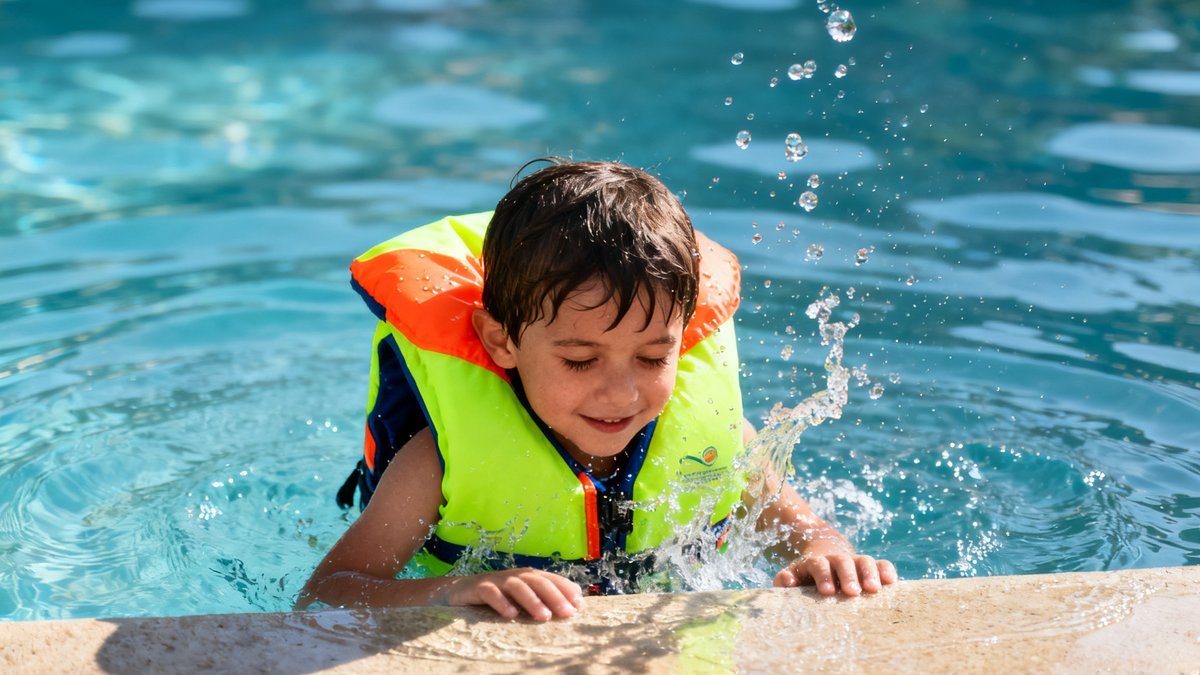
Life jackets are essential for children in open water, even if they know how to swim. Choose a US Coast Guard-approved life jacket that fits snugly and is appropriate for your child's weight. Inflatable toys, water wings, and pool noodles are not safety devices and should never be relied upon to keep a child safe in the water. A properly fitted life jacket should not ride up over the child's chin when lifted by the shoulder straps.
"A child can drown in the time it takes to read a text message. Active supervision means watching the water, not your phone. There is no notification more urgent than your child's safety."
Bath Time Safety for Infants and Toddlers
Bath time drowning can happen quickly and silently. Never leave a baby or toddler unattended in the bath, even for a few seconds to answer the door or grab a towel. A child can drown in as little as 2 inches of water. Gather all bath supplies before bringing your child to the bath area. If the doorbell rings or the phone buzzes, ignore it or wrap your child in a towel and bring them with you.
Prevent scalding by setting your water heater to 120 degrees Fahrenheit maximum. Test the bath water with your wrist or elbow before placing your child in the tub. The water should feel warm, not hot. Install a anti-scald device on the faucet and use a slip-resistant bath mat to prevent falls. Teach older toddlers to sit in the bath rather than stand, and empty the tub immediately after use.
Teaching Water Safety Skills
Formal swimming lessons are recommended for children starting around age 1, though readiness varies by child. Look for lessons that teach water survival skills including floating on the back, turning to breathe, and swimming to the edge. Even after lessons, children need constant supervision near water. General parenting advice: enroll in a CPR course specifically focused on infants and children. Knowing CPR gives you the confidence and skills to respond effectively in an emergency.
Conclusion
Water safety requires constant vigilance and multiple layers of protection. Whether at the pool, beach, or bathtub, active supervision is your most important safety tool. Combine supervision with physical barriers, life jackets, swimming lessons, and CPR training to create comprehensive protection for your children. Drowning is preventable, and every parent has the power to reduce the risk through consistent safety practices.
"Drowning is fast, silent, and preventable. The combination of supervision, barriers, and skills training creates a safety net no single measure can provide."
"Water safety is not about being afraid of the water. It is about respecting the water and knowing how to keep your family safe while still having fun."
Related Articles
For more parenting guidance, check out these related articles:
- Complete Home Childproofing Guide: Room-by-Room Safety Checklist
- First Aid for Parents: 15 Common Childhood Emergencies and How to Respond
Frequently Asked Questions
At what age can my child start swimming lessons?
The American Academy of Pediatrics suggests starting formal swimming lessons around age 1 for drowning prevention benefits. However, not all children are developmentally ready at this age. Parent-child water introduction classes can start as early as 6 months to build comfort in water. By age 4, most children are developmentally ready for independent swimming instruction.
Are swim floaties and water wings safe?
Inflatable arm bands, water wings, and floaties are toys, not safety devices. They give children and parents a false sense of security and can deflate or slip off unexpectedly. US Coast Guard-approved life jackets are the only appropriate flotation devices for children who are not strong swimmers.
How do I know if my child is drowning?
Drowning is often silent and quick. Signs include the head tilted back with the mouth open, eyes glassy or closed, hair covering the forehead or eyes, hyperventilating or gasping, and the child trying to swim in a particular direction without making progress. Unlike in movies, drowning victims rarely yell or wave for help.
What should I do in a drowning emergency?
Remove the child from water immediately, call emergency services, and begin CPR. If trained in infant or child CPR, give 30 chest compressions followed by 2 rescue breaths. Continue until emergency services arrive or the child begins breathing. Take the child to the emergency room even if they seem fine after a near-drowning, as secondary drowning can cause breathing difficulties hours later.