Table of Contents
Leave a legacy that goes beyond material wealth. Discover how to pass down your family's stories, values, and traditions.
All Ages
Jordan Myers
Leave a legacy that goes beyond material wealth. Discover how to pass down your family's stories, values, and traditions.
Family stories are the threads that connect generations. Research shows that children who know their family stories have stronger senses of belonging, higher self-esteem, and greater resilience in the face of challenges. Stories about ancestors overcoming difficulties, family traditions, and shared experiences create a narrative identity that helps children understand who they are and where they come from.
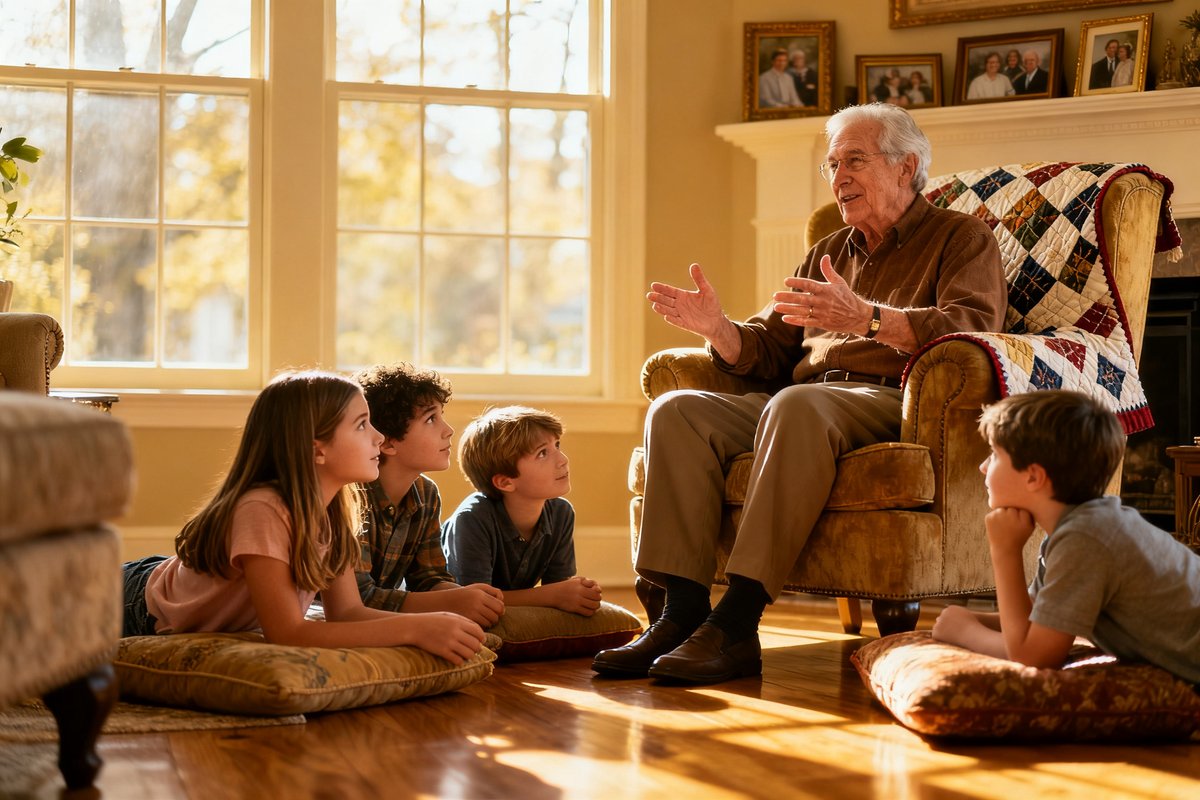
Grandparents are natural storytellers, carrying memories that span decades and multiple generations. Share stories from your childhood, stories about your own parents and grandparents, and stories about your grandchildren's parents when they were young. Include both triumphs and struggles. Children benefit from hearing that their parents and grandparents faced challenges and persevered. These stories normalize difficulty and build resilience.
Record family stories in multiple formats to ensure they survive. Write them down in a family journal or create a digital document. Audio recordings capture the storyteller's voice and emotional inflections in ways writing cannot. Video recordings add visual elements including facial expressions, family photographs held up to the camera, and the storyteller's gestures. Create a simple interview routine where grandchildren ask grandparents prepared questions about their lives.
Family traditions create a sense of identity and belonging that persists across generations. Traditions can be holiday-based, seasonal, or completely unique to your family. The most powerful traditions are not necessarily elaborate. A special breakfast on the first day of school, an annual camping trip, a particular song sung at birthdays, or a specific dish prepared for holidays all create continuity and anticipation.
Involve grandchildren in creating and maintaining traditions. Ask them what traditions they value and what new ones they would like to start. The traditions that survive across generations are those that evolve to stay meaningful. A tradition that started as a grandparent reading a specific book might evolve into that same grandchild reading the book to their own children decades later.
"Traditions are not about replicating the past exactly. They are about preserving the essence of what matters while allowing each generation to make it their own."
The most effective intergenerational traditions create opportunities for shared experiences. A monthly multigenerational game night brings everyone together around the same table. A shared garden project lets grandparents teach grandchildren about plants and patience. A family cookbook that collects recipes from each generation preserves culinary heritage and creates a practical heirloom that families use regularly.
Values are transmitted most effectively through example rather than instruction. Children absorb values by watching how the important adults in their lives treat others, handle challenges, and make decisions. Grandparents have a unique opportunity to model values in a context that is separate from daily parental discipline. A grandparent's patience, kindness, work ethic, and generosity leave lasting impressions precisely because they are demonstrated rather than preached.
Be intentional about articulating the values your family holds dear. Create a family mission statement or values list that everyone contributes to. Display it prominently and refer to it when making decisions. Talk about why certain values matter and share stories that illustrate those values in action. When children understand not just what their family believes but why, the values become internalized guides for their own lives.
General parenting advice: remember that legacy is built in small, consistent actions rather than grand gestures. The patience you show when a child spills their milk, the kindness you offer to a struggling stranger, and the honesty you practice in daily transactions all become part of the legacy you pass down. Children may not remember the specific lessons you taught, but they will remember how you made them feel and how you lived.
Creating a family legacy is one of the most meaningful contributions grandparents can make. Through intentional storytelling, meaningful traditions, and consistent value-sharing, you build a foundation that supports your grandchildren throughout their lives. The legacy you leave is not measured in material wealth but in the stories your grandchildren will tell their own children about the grandparent who loved them, taught them, and believed in them.
"The stories we share, the traditions we keep, and the values we live create a legacy that no amount of money can match. This is the inheritance that truly lasts."
"A family's legacy is not written in a will. It is written in the hearts of children who carry their grandparents' wisdom and love into the next generation."