Table of Contents
From paperwork to plane seats, here is everything you need to cross borders confidently with your children.
All Ages
Jordan Myers
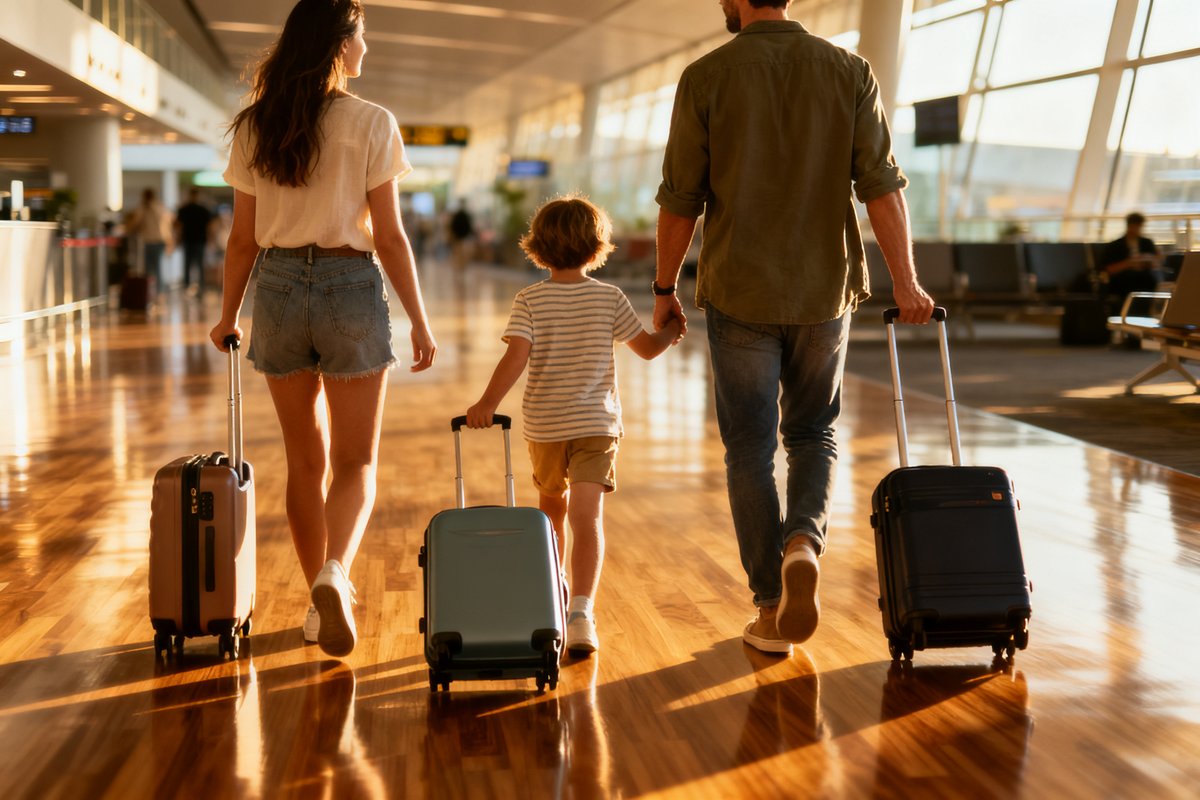
From paperwork to plane seats, here is everything you need to cross borders confidently with your children.
International travel with children begins with proper documentation, and the rules differ significantly from adult passport applications. Both parents must typically appear in person when applying for a child under 16, or provide a notarized Statement of Consent if one parent cannot be present. The application requires proof of citizenship, usually the child's certified birth certificate, and proof of parental relationship. Passport photos for infants and toddlers can be challenging to capture correctly -- many passport acceptance facilities will take them on-site for an additional fee.
Processing times for children's passports can extend beyond the standard 6 to 8 weeks, especially during peak travel seasons. The State Department recommends applying at least four months before your planned departure. If you are traveling to a country that requires a visa, check whether children need separate visa applications. Some countries have specific entry requirements for minors, such as notarized parental consent letters, even if a visa is not required.
"Proper documentation is the foundation of stress-free international travel with children. The hour you spend at the passport office saves days of frustration at border crossings and airport check-in counters."
Vaccine requirements for international travel depend on your destination and the time of year. Routine childhood vaccines should be up to date before any international trip. Many countries require yellow fever vaccination for entry, and this vaccine cannot be given to infants under 9 months of age. Hepatitis A and typhoid vaccines are recommended for many developing countries where food and water safety may be questionable.
Schedule a travel medicine appointment 6 to 8 weeks before departure, as some vaccine series require multiple doses spread over several weeks. The travel medicine specialist will review your itinerary, assess disease risks specific to your destinations, and recommend appropriate preventive measures. For destinations with malaria risk, they will prescribe age-appropriate antimalarial medication. General parenting advice: children may experience stronger reactions to travel vaccines than adults, so plan for a quiet day after each immunization.
Pack a dedicated family health kit that goes beyond basic first aid. Include age-appropriate versions of motion sickness medication, antihistamines for allergic reactions, oral rehydration salts for diarrhea, and a digital thermometer. Carry a basic antibiotic ointment, bandages in various sizes, tweezers for splinters, and insect repellent containing DEET or picaridin. For destinations with questionable water quality, pack a portable water filter or purification tablets.
Jet lag affects children differently than adults. Young children often adapt more quickly to new time zones but show their disruption through increased fussiness, disrupted sleep, and irregular appetite. Start adjusting bedtimes 30 minutes earlier or later each night in the week leading up to your trip, depending on your direction of travel. Eastward travel, which requires waking up earlier, is typically harder to adjust to than westward travel.
During the flight, encourage children to drink water frequently and avoid sugary drinks that can disrupt sleep patterns. Move around the cabin periodically to prevent restlessness and reduce the risk of deep vein thrombosis on long flights. Once you arrive, spend time outdoors in natural sunlight to reset internal circadian rhythms. Avoid allowing children to nap for more than 30 minutes during the daytime at your destination, as longer naps perpetuate the jet lag cycle.
Choose flight times that align with your children's natural sleep rhythms. Red-eye flights work well for very young children who will sleep through most of the journey, but they can be challenging for energetic preschoolers who may not settle down. Direct flights are worth the premium price when traveling with children, as connections add stress, walking time, and opportunities for missed flights.
"Jet lag with children is not about eliminating it completely. It is about managing the transition so that day one at your destination is a good day, not a recovery day."
International travel with children requires more preparation than adult-only trips, but the rewards of exposing your children to different cultures, languages, and landscapes are immeasurable. Focus on the documentation well in advance, prioritize health preparations, and manage your expectations for travel days. The skills your children gain from navigating international travel will serve them well throughout their lives.
"Traveling with children to another country teaches them that the world is bigger than their neighborhood. That lesson is worth every moment of planning."
"A delayed flight with a patient parent teaches a child more about resilience than a perfect vacation ever could."